

Poas Volcano National Park is one of Costa Rica’s most fascinating and accessible natural attractions. Located just 35 minutes north of the city of Alajuela, in the heart of the Central Valley, this park has long been the most visited national park in Costa Rica. Its popularity is largely due to its close proximity to Juan Santamaría International Airport, the city of Alajuela, and San José, making it an easy half-day trip for travelers with limited time.
However, Poás Volcano is also one of Costa Rica’s most powerful and unpredictable volcanoes. Its beauty is matched by its raw geological force—something that has shaped both its history and its future.

A Park Temporarily Closed by Nature’s Power
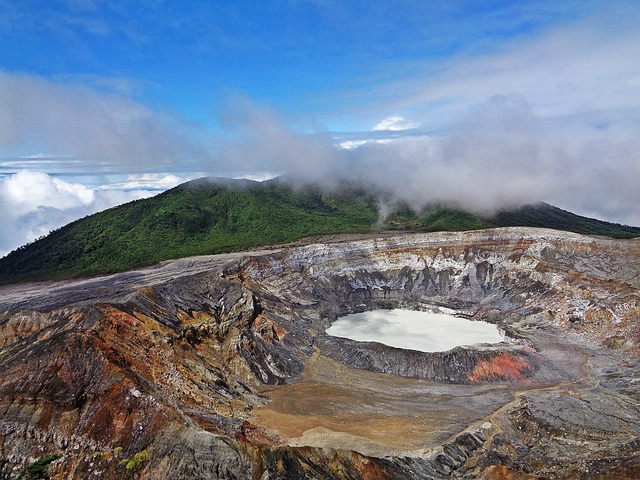
As of July 18, 2017, Poás Volcano National Park was closed indefinitely due to increased volcanic activity. The eruption began in April 2017, when the volcano started releasing intense sulfuric gases into the atmosphere. Large boulders began shooting out of the crater—some landing near nearby residential areas and cattle farms—forcing authorities to close the park for public safety.
This closure is a powerful reminder that Costa Rica’s volcanoes are not dormant museum pieces—they are living, breathing forces of nature. While closures can be disappointing for travelers, they are necessary to protect lives and preserve the surrounding environment.
Understanding the Two Craters of Poás Volcano
Poás Volcano is unique because it contains two major craters, each with a very different personality.
Lake Botos Crater – Peaceful and Inactive
The first crater is Lake Botos, an inactive crater that erupted thousands of years ago. Over time, it cooled and transformed into a stunning crater lake, surrounded by dense cloud forest vegetation.
A well-maintained walking trail leads visitors upward to a viewing area overlooking Lake Botos. The path winds through misty forest, often shrouded in fog, creating a mystical atmosphere. On clear days, the lake’s deep green-blue color contrasts beautifully with the surrounding vegetation.
Lake Botos is calm, silent, and reflective—offering a peaceful contrast to the violent nature of the active crater.
The Active Crater – A Powerful Geyser
The second crater is the active geyser, measuring approximately 1.7 kilometers wide. This is the heart of Poás Volcano’s activity and the reason the park has experienced multiple closures over the years.
This crater behaves much like a giant pressure valve, releasing gases, steam, and occasionally rocks and ash. The activity here is unpredictable, which is why access is strictly controlled even when the park is open.
What Is a Geyser?
You may wonder—what exactly is a geyser?
Geysers are often described as “nature’s tea kettles.” They occur when groundwater is heated by magma beneath the Earth’s surface. As pressure builds, hot water and steam are violently expelled through openings in the ground.
A famous example is Old Faithful in Yellowstone National Park, Wyoming, USA. Old Faithful regularly sprays hot water and steam high into the air, delighting thousands of visitors each year. Yellowstone is home to the largest concentration of geysers in the world.
Poás Volcano’s active crater functions in a similar way—but with much more intensity and danger due to its size and volcanic chemistry.
Walking Into the Cloud Forest
I have visited Poás Volcano National Park many times, and each visit feels different. The park sits at an elevation of approximately 8,000 feet above sea level, placing it within a cool, misty cloud forest ecosystem.
The weather here is often unpredictable. Fog drifts in quickly, rain showers come and go, and temperatures are noticeably cooler than in the lowlands. This creates a lush environment unlike anywhere else in Costa Rica.
Birdlife and Unique Vegetation
One of the joys of visiting Poás Volcano National Park is the abundance of birdlife, especially hummingbirds. On one visit, I observed three different species of dark brown hummingbirds, darting between flowers with astonishing speed.


The vegetation here is thick and specialized, adapted to cool temperatures, strong winds, and frequent moisture. One of the most iconic plants is the umbrella tree, whose massive leaves can measure meters wide. These leaves collect water and provide shelter for insects and small animals.
Ferns are another dominant feature of the forest. Unlike delicate tropical ferns found in warmer climates, the ferns here have thick, tough leaves, designed to withstand the cool, damp environment.
Trails, Views, and Time Needed
The trails inside Poás Volcano National Park are well maintained and easy to walk, making the park accessible to visitors of most fitness levels. When fully open, you can comfortably explore the park in about 1.5 hours.
This includes:
- Walking the trails
- Visiting Lake Botos crater
- Viewing the active crater (when permitted)
- Exploring the visitor facilities
The Visitor Center and Museum
One of the highlights of the park is the interactive museum, located near the visitor center. This museum is a must-see and provides excellent educational displays about:
- Volcanic activity
- The geology of Poás Volcano
- Costa Rica’s tectonic history
- The surrounding ecosystems
Next to the museum is a well-stocked gift shop, offering books, souvenirs, and locally made items.
And no visit would be complete without stopping at the coffee shop, where you can enjoy excellent Costa Rican coffee and fresh pastries—especially welcome after a cool walk through the cloud forest.
What You Need for Your Visit
When Poás Volcano National Park is open, visitors should come prepared. Essentials include:
- Good walking shoes
- A light rain jacket
- Warm layers (it can be chilly)
- Camera
- Cash for entrance fees and souvenirs
Entrance Fee
- $10 per person
- Cash only (no credit cards accepted)
How to Get to Poás Volcano National Park
There are several ways to reach the park:
Rental Car
- Approximately 35 minutes north of Alajuela
- Follow the road north out of Alajuela
- Pass the Justice Building
- Look for clearly marked signs to Poás Volcano
Taxi
- Approximate cost: $80 round trip
- Many taxi drivers will wait while you visit the park
Guided Group Tour
- Several companies offer day tours
- Average cost: around $110 per person
- Includes transportation and a guide

Why Poás Volcano Is Still Worth Talking About
Even during periods of closure, Poás Volcano National Park remains one of Costa Rica’s most iconic natural landmarks. Its combination of accessibility, dramatic volcanic features, cloud forest ecosystems, and educational facilities make it a standout destination.
When the park is open, it offers one of the easiest volcano experiences in the country—allowing visitors to walk right up to the edge of a massive crater and witness the power of the Earth firsthand.
Poás Volcano reminds us why Costa Rica is known as a land of fire and water, mountains and mist. It is a place where beauty and danger coexist, and where nature—not humans—sets the rules.
For travelers, scientists, and nature lovers alike, Poás Volcano National Park is not just a destination—it is a lesson in respect for the living planet beneath our feet.